In November 2024, we find ourselves in Tampa Bay, Florida, where Mark T., then 34 years old, thought he had hit the jackpot after spending $480 in cryptocurrency to obtain six fake debit cards, each equipped with a unique PIN. At first, his scheme worked well, allowing him to extract 4,200 from three separate ATMs. Unfortunately for him, his luck ran out during his fourth attempt, leading to the attention of federal agents.
We won’t delve into the specifics of the platform he used; that’s not the main takeaway here. What’s fascinating is how quickly this seemingly clever individual went from being elusive to getting caught within just 15 days following his withdrawals, all in a stunning 72-hour span. The investigation was constructed using ATM surveillance, transaction logs, and his cryptocurrency acquisition, ultimately directing investigators to the U.S. Secret Service. This situation serves as a cautionary tale about how rapidly circumstances can shift in the realm of cybercrime.
We will not name the website where the purchase was made.
What matters
- ATM video identified Mark from 23 seconds of footage.
- Bank algorithms connected the cloned-card withdrawals by Day 3.
- A KYC exchange tied Mark to the Monero purchase.
- Four withdrawals produced $4,900 and a 60-month sentence.
- Fast victim reports helped block the remaining two cards.
1. 1. What exactly did Mark buy, and how did the carding chain work?
Mark acquired a complete cash-out kit instead of just separate banking details.
The package containing six cards was discreetly shipped in neutral wrapping. Each card held stolen magnetic track information linked to actual accounts, along with matching PIN codes. Mark opted to pay in Monero due to the challenges associated with tracing this particular cryptocurrency's journey.
The carding procedure unfolded over five distinct phases:
- Gathering account information. Criminals extract magnetic data from track 1 and track 2 using methods like ATM skimmers, shimmer devices, phishing schemes, data breaches, or acquiring dumps from darknet markets.
- Manufacturing the cards. The stolen tracks are imprinted onto blank plastic cards. The names, expiration dates, and card numbers are embossed to create an appearance similar to that of legitimate bank cards.
- Incorporating the PIN. Once an overlay keypad or a hidden ATM camera captures a victim’s PIN, the buyer obtains a card that is ready for cash withdrawals.
- Extracting funds. Money is withdrawn before the account owner realizes any fraudulent activity and reaches out to the bank to halt the card's use.
- Cleaning the funds. Cash can be converted into cryptocurrency using a Bitcoin ATM or through peer-to-peer exchanges, making it harder to trace.
This material represents a typical product of the carding industry, whether individuals find it through carding forums, dark web searches, Reddit discussions on cloned cards, references about CF card cloning, or threads on card skimming. Regardless of the terminology used, it all boils down to what Mark had: banking information that was illegally obtained from identifiable victims and transferred onto plastic cards.
Initially, everything seemed to be going smoothly. The package arrived as expected, three ATMs dispensed $4,200, and the cards appeared fully functional. It was akin to receiving a key without realizing that every door had surveillance overhead.
This account is accurate for the situation documented in Mark’s case; however, it does not serve as a guide for readers seeking to replicate such criminal activities.
2. 2. Why did the fourth ATM matter more than the darknet marketplace?
The significance of the fourth ATM lies in its ability to transform a digital transgression into a documented physical act.
Mark approached an ATM in a suburb of Tampa Bay without any disguises like masks, glasses, or hats. He withdrew $700, took his card, and simply walked away. In just 23 seconds of recorded footage, investigators obtained a clear image that would later identify him.
We often view ATMs as mere metallic boxes that dispense cash, but they serve a much larger role as a comprehensive evidence collection system. These machines typically integrate various forms of documentation:
- A camera positioned directly in front of the user’s face records video at a resolution of 1080, often using infrared light to enhance visibility during nighttime.
- In various models, there exists an additional concealed camera, oriented differently and undetectable from the exterior.
- A detailed transaction log that accurately captures the exact time, amount withdrawn, card number, ATM ID, and the result of the transaction.
- Geolocation information that identifies the machine's location and incorporates this data into the bank's records.
- Network activity logs that document requests sent to the bank processor along with pertinent connection details.
This blend of features illustrates why video evidence can be more effective than a detective searching without a clear lead. The transaction log guides investigators to the exact seconds they need to examine, while the camera captures the individual at that moment. When digital crime intersects with physical presence, the veil of anonymity is lifted at the ATM.
Concerns about identifying skimmers on card readers or verifying the presence of credit card skimmers relate to the same chain of events. While looking up images of ATM skimmers may help some grasp what skimming equipment entails, Mark’s downfall was due to the ATM’s legitimate surveillance technology rather than any skimming device that initially compromised victims’ data.
This holds true as long as the machine retains accessible footage and synchronized logs; the situation is different when such evidence is missing. In Mark’s instance, both elements were intact, and the camera didn’t take into account how private Monero transactions were supposed to be.
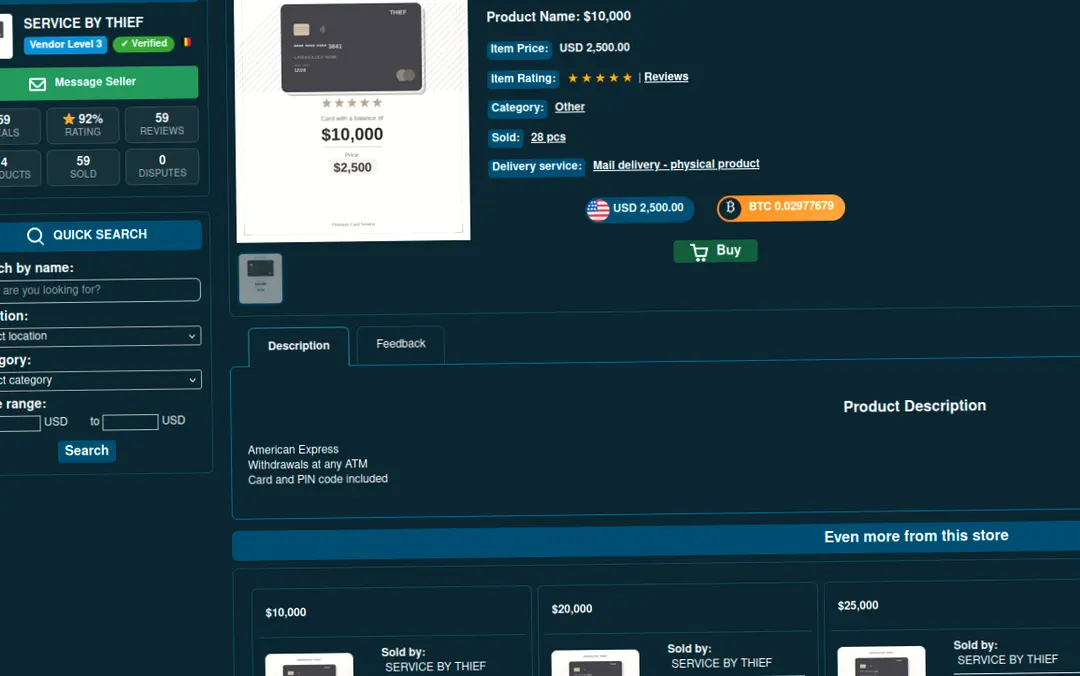
3. 3. How did investigators move from three complaints to Mark’s identity?
The investigation transitioned from three initial reports to identifying Mark through a blend of victim statements, advanced fraud detection tools, transaction logs from ATMs, and identification evidence.
This investigation transpired over a span of 15 days, with Mark’s identity confirmed in merely 72 hours. The swift progression of this inquiry is remarkable: by Day 3, unusual withdrawal patterns had already been detected by the bank's fraud detection systems, although the arrest and search took some additional time to carry out.
- Day 1, November 2024. Three victims from North Carolina, Florida, and Georgia reported unauthorized transactions on their accounts. Their banks promptly froze the affected cards and included this information in an early fraud alert system.
- Day 3. The bank’s systems identified a troubling pattern: a series of rapid withdrawals from the same cloned cards across different states. This prompted an emergency alert and activated the bank’s investigative team.
- **Day 5.By the fifth day, the responsibility for the case was transferred to the U.S. Secret Service, the agency that investigates financial crimes. Details regarding the transactions and video footage from all pertinent ATMs were requested by an analyst from the USSS.
- Day 8. A video from the fourth ATM captured a clear image of the suspect. A match with Mark T. was revealed when we cross-referenced the driver’s license information against the records from the Florida Department of Public Safety, and notably, he had no previous criminal record. An analysis revealed that his home was within a 40-mile radius of where all the withdrawals took place.
- Day 12. An investigator obtained a warrant to scrutinize Mark's online activities, which included his browsing history, records from his Internet Service Provider (ISP), and interactions with his cryptocurrency wallet. Analysis of the ISP data revealed visits to Tor exit nodes around the times the cards were purchased. A court order directed to the exchange where Mark bought Monero connected his wallet to an account on a darknet marketplace.
- Day 14. A judge sanctioned a search of Mark’s home. While executing a search warrant at Mark's residence, law enforcement stumbled upon six unmarked plastic cards, a laptop filled with information linked to darknet activities, $3,200 in cash, and packaging materials from a mail order, along with an MSR device.
- On the 15th day, during questioning, Mark admitted to having purchased the cards and cashing out four of the six, while the banks had already blocked the underlying accounts, which caused the failure of the remaining two.During questioning, it was revealed that Mark had been arrested. He admitted to buying the cards and withdrawing cash from four of them during questioning, while the other two were already non-functional due to the bank blocking them prior to his attempts to use them.
The investigation resembled assembling a jigsaw puzzle: no single document presents the entire story, but by combining dates, amounts, locations, and identities, a clear narrative begins to form.
This technique proves useful if banks, service providers, and investigators can securely retain and legally access vital records. However, it falters when one assumes that a solitary complaint can directly identify a suspect. Recognizing the swift progression of events and the collaborative efforts involved in the inquiry emphasizes the intricacies of contemporary financial crime and the quick responses necessary to combat it.
4. 4. What do the case numbers show?
The statistics tell a story of quick gains followed by harsh repercussions.
Using six forged cards that cost him $480, Mark collected $4,900 over four withdrawals: $4,200 from the first three and another $700 from the last. His arrest followed soon afterward, and he received a 60-month sentence.
- Federal custody sentence: 5 years, or 60 months
- Supervision after release: 3 years
- ATM distance from Mark’s home: Within 40 miles
- Cash recovered from Mark’s home: $3,200
- Completed withdrawals: 4
- Combined cash collected: $4,900
- Wait between the withdrawals and arrest: 15 days
- Money spent on the cards: $480
- Fourth ATM payout: $700
- First three ATM payouts: $4,200
- Copied debit cards obtained: 6
- Court-ordered fines and restitution: $22,000
The math is simple yet striking. With just a $480 outlay, he raked in $4,900, but this was followed by financial penalties and restitution that soared to $22,000, along with years in prison and supervised release. What he likely viewed as an easy way to make money spiraled into a costly debacle.
This analysis is invaluable for understanding the financial penalties and consequences that arise from such actions. However, it's important to note that these figures should not be seen as a one-size-fits-all approach when it comes to sentencing in similar circumstances. The complexities of each case can lead to vastly different outcomes.
5. 5. Why did paying with Monero fail to protect Mark?
Monero did not need to be fully traced because investigators found the identifiable point where Mark entered the cryptocurrency system.
Mark acquired Monero through a centralized exchange. To satisfy the exchange’s know-your-customer process, he had uploaded a passport and a selfie. When the exchange received a court order, it provided his identity and transaction history.
The later movement of Monero remained difficult to follow, which was the reason he selected it. Yet investigators did not have to map every transfer. The purchase of the correct cryptocurrency, in the relevant amount, on the relevant date became one piece of the evidence connecting him to the marketplace transaction.
The timing of these events strengthened the connection. Mark’s purchase of Monero, his darknet order, the receipt of the mailed cards, and the ATM withdrawals all took place within a two-week timeframe. While this overlap was circumstantial and not a complete case on its own, it was consistent with the video evidence, transaction records, and items seized from his residence.
Physical evidence closed the remaining gap. Magnetic tracks on the recovered cards matched the dumps stolen from genuine victims. The laptop retained marketplace history and traces associated with Tor Browser, while the MSR device, shipment packaging, and cash were present in the apartment. The $3,200 was in denominations matching those dispensed by the ATM.
A privacy-focused cryptocurrency can hide movement, but it cannot remove a face from recorded footage or make encoded plastic disappear from a searched home. It is the digital equivalent of using an unmarked envelope while writing a return address on the outer package.
This is true if the cryptocurrency purchase passes through an exchange holding verified identity records; it does not mean every individual Monero transfer can be reconstructed. The source’s conclusion is narrower: entry through KYC and exit into physical cash created identifiable ends of the chain.
6. 6. Which decisions made the case against Mark stronger?
Mark’s actions significantly strengthened the case against him.
We can categorize his missteps into six key decisions noted in the source:
- He remained close to his residence. Each ATM transaction was within a 40-mile distance from where he lived, creating a recognizable geographic trend that could be flagged by fraud detection systems.
- **He did not hide his identity.By not disguising himself with a mask, glasses, or hat, he was easily identifiable through the DPS driver’s license database, as the fourth ATM captured a clear image of his face.
- Monero was acquired by him through a centralized platform.** The KYC documentation linked his verified identity to the cryptocurrency that was later utilized for marketplace transactions.
- He kept incriminating evidence at home. Investigators discovered the cards, MSR equipment, packaging, and a laptop. It’s worth noting that simply deleting files doesn’t erase all traces; for instance, the Tor Browser can leave behind remnants, and the history of operating system updates can show software usage.
- He stored cash inside his apartment. The $3,200 seized coincided with the denominations dispensed by the ATMs, adding another layer of evidence to the prosecution's case.
- He condensed his activities into a two-week period. This quick succession of transactions triggered the bank's alert system. If he had spaced out his withdrawals over several months, it might have delayed the alert, though the cameras would likely have still captured his image.
The crucial factor here was the accumulation of evidence. Each piece corroborated the others: his visible face linked to a name, his address aligned with the withdrawal sites, the exchange identified him as the crypto buyer, and his home contained the relevant tools and cards.
This holds true for understanding why this prosecution progressed swiftly; however, it doesn’t imply that making withdrawals over a longer period or disguising his appearance would have guaranteed anonymity.
7. 7. What should banks, security teams, and customers learn from the case?
The case shows that automated banking controls and physical evidence become much stronger when they are used together.
The bank’s anti-fraud system served as the initial line of defense. Pattern analysis, geographic rules, and scoring models linked activities across multiple cloned cards before a human investigator became involved. Therefore, it is recommended that banks continue investing in machine-learning models for detecting anomalies.
Physical and digital forensics supplied different halves of the answer. ATM footage showed Mark, but the transaction log told the analyst exactly when to retrieve the relevant frame. Without the timing record, investigators would have faced far more video; without the image, the log would show a withdrawal but not the person making it.
The same joined-up approach matters for prevention. Terms such as credit card skimming protection, card skimming protection, credit card skimmer protection, and credit card skimming device detector all point toward concern about the first stage of the chain. Labels such as credit card skimmer protector and card skimming protector may sound reassuring, but the source’s concrete lesson is that banks need anomaly detection while customers need to report unauthorized withdrawals quickly.
Customer awareness remained the weak point in this case because the victims did not detect the fraud immediately. Faster reporting allows the bank to block a compromised card sooner, reducing the amount a criminal can withdraw. Two of Mark’s cards had already become unusable by the time he attempted them, demonstrating the direct value of blocking.
Anonymous cryptocurrency did not provide complete anonymity either. A KYC exchange at the entry point and physical cash at the exit point linked the online and offline worlds. As long as verified identity checks exist at that gateway, the source concludes that complete anonymity is not possible.
This is true if customers review activity and promptly tell their banks about theft; it does not apply when education is treated as a replacement for bank-side monitoring. Both sides are needed, much like a lock and an alarm serving different jobs.
8. What verdict closed the case?
In March 2025, Mark faced the music after he admitted to wrongdoing involving access devices, which falls under 18 U.S.C. § 1029, as well as engaging in money laundering as outlined in 18 U.S.C. § 1957. In Florida's Middle District, a U.S. District Court handed down a 60-month federal prison sentence. Once he completes this term, Mark will be on supervised release for an additional three years, accompanied by a financial penalty of $22,000, which includes restitution payments for three victims impacted by his actions.
It’s worth noting that the judge emphasized Mark's role wasn't that of a mastermind; he was more of a buyer, situated at the tail end of a chain of transactions. While that might seem like a less significant role, it still carries serious consequences. Those orchestrating these illegal activities from a distance often manage to avoid immediate detection, posing a challenge for law enforcement. This situation highlights an important fact: even though the anonymity of the darknet can be deceptive, various tracking techniques remain viable, including video footage, financial records, and Know Your Customer (KYC) data.
Common questions
How was Mark identified?
The fourth ATM recorded his unobscured face in profile. Investigators matched the image with the Florida DPS driver’s license database and found that all withdrawals occurred within 40 miles of his home.
Did investigators trace every Monero transfer?
No. They used records from the centralized exchange where Mark completed KYC and purchased Monero, then combined the date and amount with the broader evidence timeline.
How much money did the cloned cards produce?
Four withdrawals produced $4,900. The first three totaled $4,200, and the fourth withdrawal was $700.
What sentence did Mark receive?
He received 60 months in federal prison, three years of supervised release, and $22,000 in a fine and restitution after pleading guilty in March 2025.
Related resources
These services are useful starting points for further research. Useful sites.
 Tor Browsing Sites: Safe Navigation TechniquesExplore safe techniques for navigating Tor browsing sites while minimizing risks of privacy breaches and scams.
 Dark Web Vendors List: A Comprehensive OverviewExplore our dark web vendors list for insights on marketplaces, vendor reliability, and tips for safe navigation in the dark web.
 Dark Web Sites Link: Your Comprehensive GuideDiscover legitimate dark web sites links and learn how to navigate safely without falling for scams or malware.
 Exploring Dark Web Onion Links: A Guide to Hidden SitesDiscover how to safely explore dark web onion links and access hidden sites with our step-by-step guide for first-time users.